Courses with lecturer
Shift reports, meeting notes, translating a technical manual from an international supplier, or quickly checking data in Excel — all of this takes time you would rather spend on the shop floor than at your computer. This course shows you how to simplify these everyday tasks with AI, without writing a single line of code and without any technical background.
A practical course for production supervisors, shift leaders and shop-floor technologists, teaching you how to use tools such as ChatGPT, Copilot and Gemini for everyday manufacturing tasks — reports, documentation, planning and data analysis.
Throughout the day, you will work directly on your own computer with tasks you regularly deal with in production:
Create a shift report or meeting summary in a fraction of the time — AI helps with the structure and wording, while you simply provide the facts.
Translate technical documentation from an international supplier without waiting for a translator or struggling with the English yourself.
Navigate lengthy manuals in minutes — instead of searching through hundreds of pages, ask a question and quickly find the information you need.
Use AI to create formulas, macros or charts based on a simple natural-language instruction, even if you do not know the formulas yourself.
Learn how to spot hallucinations, what you should never enter into an AI tool when protecting company data, and how to recognise risks such as deepfakes and phishing.
The course is built specifically for manufacturing environments — it is not a generic corporate AI course adapted as an afterthought. You will work with real manufacturing scenarios such as predictive maintenance, quality control, shift planning and logistics optimisation rather than abstract office-based examples.
The course also includes a comparison of ChatGPT, Copilot, Gemini, Claude and Grok, helping you understand which tool to choose for different tasks. You will also gain practical experience with NotebookLM for organising and working with multiple documents at once.
The entire course is built around hands-on exercises on your own computer — no lengthy lectures and no unnecessary theory. We recommend bringing your own laptop.
You will learn how to use AI tools such as ChatGPT, Copilot, and Gemini for everyday manufacturing tasks — writing reports, translating documentation, navigating technical manuals, and analyzing data in Excel.
No. The course does not require any technical knowledge or previous experience with AI. Basic computer skills and a willingness to try new tools are all you need.
General AI courses teach AI tools in a universal context. AI in Manufacturing focuses directly on manufacturing scenarios — shift reports, quality control, technical documentation, and other operational tasks — so you leave with practical workflows you can use directly in your day-to-day work.
The course covers ChatGPT, Copilot, Gemini, Claude, and Grok, including their key differences and when to use each tool. The main focus is on practical work with ChatGPT.
Yes. You can bring your own laptop. The course is fully practical and includes hands-on exercises completed directly on your computer.

Michal currently works at Microsoft as an Agile Coach & Principal Project Manager & PCAI, where he leads an AI transformation portfolio with a team of over 70 people. He was at the birth of the Business Value Program and for his work he received the Microsoft SPARK Award and inclusion in the Platinum Club (reserved for the 200 most influential people within Microsoft).
Michal is not “just” a technical specialist or “just” a manager, but he can connect both levels:

AI and Digital Technology Specialist

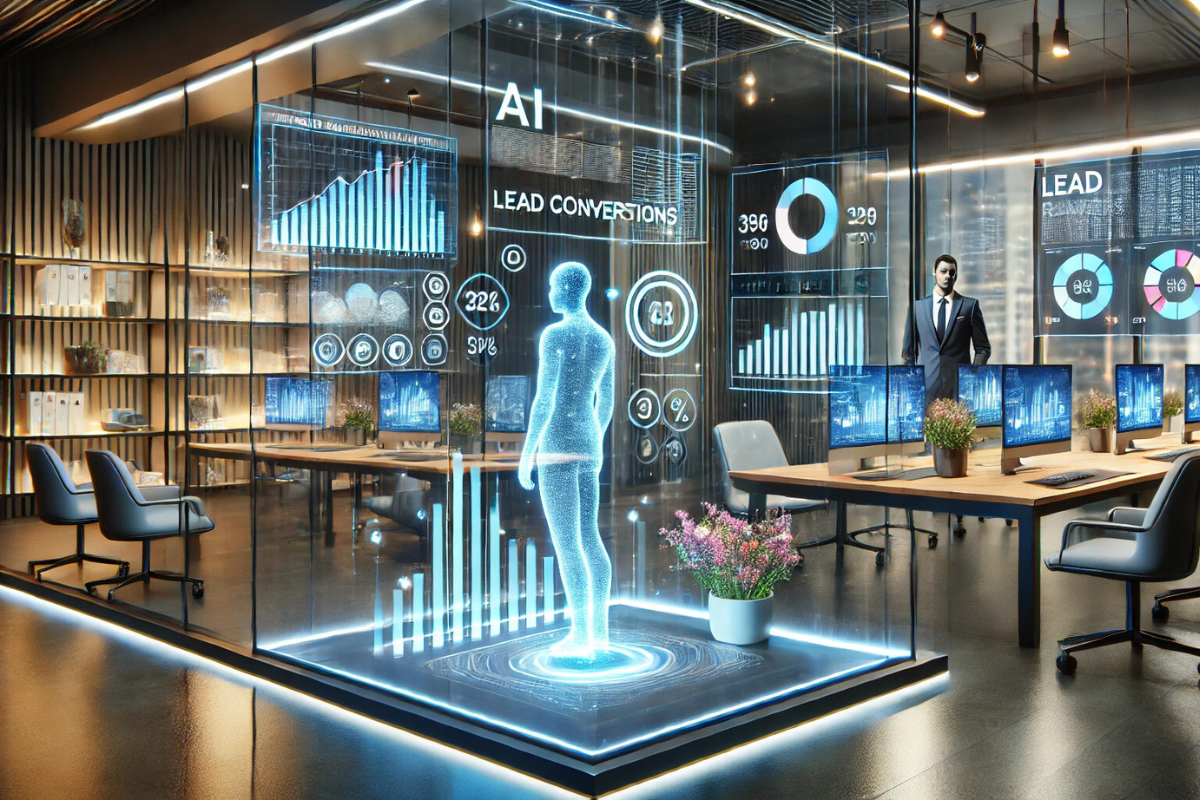
HubSpot is an American software development company. It has 8,000 employees and branches in several countries around the world. Processes related to lead generation and qualification were time-consuming and not always efficient, reducing sales productivity.

AI in practice: DHL has accelerated the delivery of parcels
DHL is one of the largest logistics companies in the world. It provides transportation and delivery of parcels in many countries. However, route planning, warehouse management and demand forecasting were difficult and often inefficient.

Microsoft, a global tech giant, faced challenges with its complex financial processes, which involved extensive financial planning and analysis (FP&A). Traditional methods were time-consuming and sometimes inaccurate, leading to delayed decisions and potential financial risks.
HubSpot is an American software development company. It has 8,000 employees and branches in several countries around the world. Processes related to lead generation and qualification were time-consuming and not always efficient, reducing sales productivity.
AI in practice: DHL has accelerated the delivery of parcels
DHL is one of the largest logistics companies in the world. It provides transportation and delivery of parcels in many countries. However, route planning, warehouse management and demand forecasting were difficult and often inefficient.
Microsoft, a global tech giant, faced challenges with its complex financial processes, which involved extensive financial planning and analysis (FP&A). Traditional methods were time-consuming and sometimes inaccurate, leading to delayed decisions and potential financial risks.